East African Community and Germany Launch Expanded AI Challenge with Focus on Ebola Response
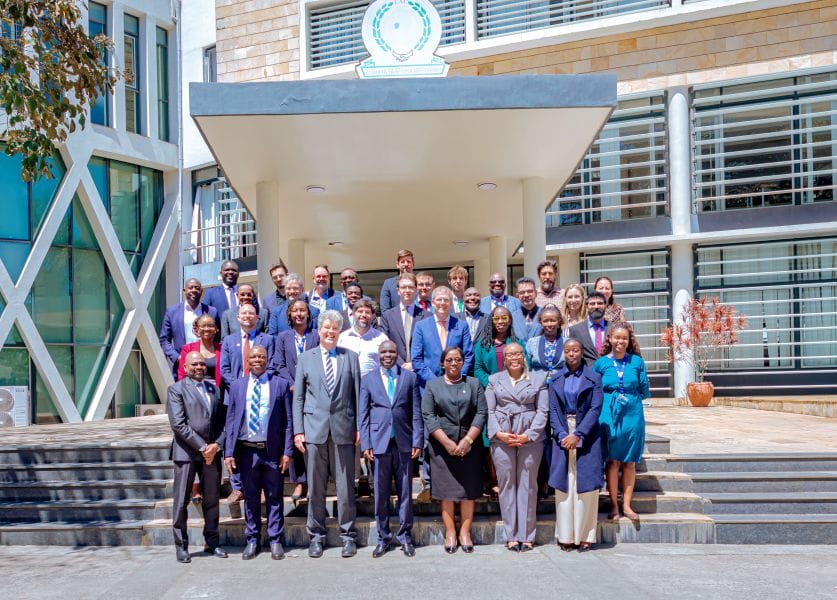
The East African Community (EAC) and the German government have launched the second edition of the AI4EAC Challenge, a significant initiative aimed at fostering AI innovation across the eight EAC partner states. This year, the challenge dramatically expands its reach, targeting 20,000 participants, a fivefold increase from its inaugural round. A key new feature is a dedicated track for developing AI solutions to support Ebola outbreak detection, preparedness, and response, highlighting a practical application of AI for regional resilience.
The challenge, which includes $50,000 in prize funding, was inaugurated following a high-level roundtable at the EAC headquarters. New strategic partners, Equity Group Holdings and Germany's Karlsruhe Institute of Technology, have joined, bringing additional expertise and resources. Joachim Schmitt from Germany's Federal Ministry for Economic Cooperation and Development emphasized the necessity of a regional approach, citing that 80% of Africa's AI investment has concentrated in just four countries, and the continent possesses less than 1% of global data center capacity despite having 18% of the world's population.
The initiative is rooted in the EAC AI Alliance's premise that no single country can overcome these disparities alone, advocating for a unified regional strategy to scale AI investment and impact. Beyond the Ebola response, Equity Group is anchoring a finance track, encouraging participants to develop real-world solutions that can progress beyond the competition. This addresses concerns about the 'permanent pilot economy' in Africa, where successful prototypes often fail to translate into sustained contracts or businesses.
The inaugural challenge, which involved nearly 4,000 participants from 57 universities, focused on solutions in health, agriculture, finance, and education. The current expansion, while offering a modest prize pool compared to the ambitious target, underscores the program's primary value in building a skilled workforce. The EAC Deputy Secretary General, Aguer Ariik Malueth, highlighted that the priority is to equip East Africans with the necessary skills, knowledge, and partnerships to leverage AI for job creation, improved public services, and regional problem-solving.
Germany's involvement, through BMZ and GIZ, extends beyond skilling to modernizing university teaching, closing digital skills gaps, and advancing a harmonized, gender-responsive regional AI policy framework. This comprehensive approach aims to build a robust AI ecosystem in East Africa, supported by initiatives like IUCEA's Regional AI Network of Universities.
Source
More in society

MTN and Microsoft Partner to Upskill Nigerian Teachers in AI-Assisted Education, Targeting Millions of Students
MTN, in partnership with Microsoft, has trained 500 Nigerian teachers in AI-assisted teaching, making them the first in the country to receive such formal training. This…
Kenyan Content Moderators Fight for Rights Against Tech Giants
A key legal battle is unfolding in Kenya as content moderators, including those working on AI platforms like OpenAI, challenge tech giants like Meta over working conditions and…

Nigerian Insurgents Using Commercial AI for Tactical Advantage, Fueled by ISIS Support
New research indicates that Nigerian insurgent groups, including ISWAP and Boko Haram, are actively using commercial AI models for tactical and operational purposes, facilitated…

South African AI Legal Chatbot Reveals Workplace Disputes as Top User Concern
My AI Lawyer, a South African AI legal chatbot, has found that workplace disputes are the most common type of query, revealing a significant need for accessible legal information…
The dispatch
One email a day. The AI stories shaping Africa.
Rewritten for clarity, sourced always. No spam; unsubscribe anytime.