Ubuntu-Inspired AI Framework Proposed to Secure Africa's Equitable Future in AI

Artificial intelligence holds immense promise but also risks exacerbating global inequalities, a concern highlighted by the United Nations Development Programme's "The Next Great Divergence" report. For African nations, this warning is particularly salient, as many face existing disparities in digital infrastructure, compute access, skilled workforces, and regulatory capacity, which could hinder their ability to harness AI's benefits and deepen technological dependency.
The article illustrates how these foundational weaknesses can lead to problematic AI adoption in Africa, often resulting in reliance on externally developed "black-box" systems. Examples include natural language processing tools that fail due to a lack of local data and cultural context, leading to inaccurate outputs. This extends across societal impact, economic participation, and governance, where African communities risk being misrepresented in datasets, relegated to low-value roles in global AI chains, or becoming reliant on opaque systems.
To counter this impending "next great divergence," the article introduces the "Ubuntu AI Framework" and its companion "Ubuntu AI Scorecard." Grounded in the African philosophy of Ubuntu, which emphasizes collective well-being and interconnectedness ("I am because we are"), this framework proposes a relational and social approach to AI governance. It moves beyond purely technical or proprietary considerations to focus on responsibility, benefit-sharing, and long-term capability building within African contexts.
The Ubuntu AI Framework acknowledges the inevitability of engaging with global AI firms and standards but insists on structuring these partnerships to strengthen domestic institutions. It seeks to ensure that Africa is a co-creator in the AI ecosystem, not merely a data source or end-user. The Scorecard translates these values into measurable standards, evaluating AI initiatives based on criteria such as ownership, skills transfer, data sovereignty, local investment, and socio-economic impact, thereby embedding developmental outcomes directly into decision-making.
By providing a structured method for evaluating AI initiatives, the framework empowers African public institutions to engage global AI actors with clear expectations and enforceable conditions. It offers a strategic pathway to pursue immediate participation in the global AI landscape while simultaneously building local technological sovereignty and capacity. This proactive approach aims to ensure that AI adoption genuinely contributes to equitable development and prevents the widening of existing fault lines, aligning technology with investment in people and public value.
More in policy

South Africa Leads BRICS Call for Global AI Governance and Independent Evaluation
South Africa, through President Cyril Ramaphosa, is advocating for a robust international framework for AI governance within the BRICS bloc, including independent scientific…
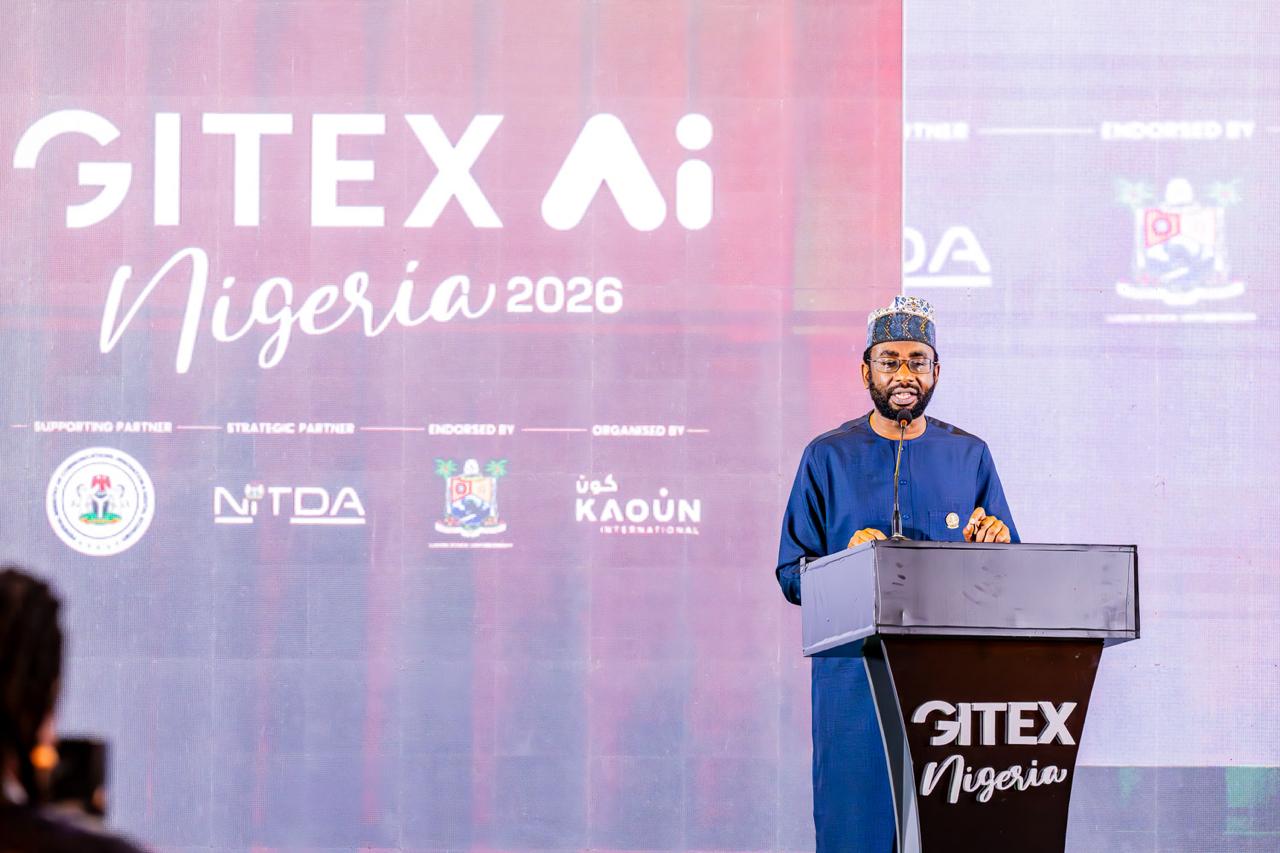
GITEX Nigeria Emphasizes Sovereign AI and Digital Transformation for a $1 Trillion Economy
GITEX Nigeria, a major tech and AI event, has launched in Abuja with a strong focus on advancing the nation's digital transformation and sovereign AI ambitions. Nigerian leaders…

Kenyan Political Operative Used Anthropic's Claude for AI-Generated Election Propaganda
A Kenyan political operative leveraged Anthropic's Claude AI to mass-produce social media propaganda ahead of the 2027 general election, praising government figures and targeting…

Anthropic Uncovers AI-Powered Political Influence Campaign in Kenya
A report by Anthropic details an AI-driven political influence operation in Kenya that used the Claude model to generate social media posts supporting the government and attacking…
The dispatch
One email a day. The AI stories shaping Africa.
Rewritten for clarity, sourced always. No spam; unsubscribe anytime.