Africa's AI Ambition: Navigating Rapid Growth While Securing Digital Sovereignty

Africa is experiencing a rapid acceleration in AI adoption and digital transformation across various sectors, from finance to public services. This swift progress brings a critical question to the forefront: who maintains ownership and control over the AI platforms, data, and the value generated? The article argues that digital sovereignty is not an impediment to speed but rather a prerequisite for structured and sustainable growth, emphasizing that uncontrolled expansion risks value extraction rather than retention.
Governments across the continent are actively developing regulatory frameworks to define the digital landscape. The African Union's AI and data policy frameworks, alongside national initiatives like South Africa's draft AI policy review, underscore a continental recognition that digital infrastructure is now economic infrastructure. True digital sovereignty, the piece contends, extends beyond merely where data is stored; it encompasses foundational elements such as robust connectivity, secure cloud environments, sufficient compute power, and strong operational oversight.
African organizations, particularly in regulated sectors like finance, are transitioning from AI testing to production-grade deployments, integrating governance, risk management, and auditability from the outset. This approach demonstrates that trust is an enabler, not a brake, on responsible AI scaling. The continent faces a pivotal moment, akin to its leapfrogging with mobile money, where AI can drive productivity and unlock new industries, provided the pitfalls of external value extraction, seen in critical minerals, are avoided.
The discourse has evolved from merely understanding AI to strategically leveraging it for growth and competitiveness. The author highlights that successful navigation of this era hinges on effective partnerships. These collaborations should prioritize co-creation, blending global expertise with local execution to build infrastructure for ownership, facilitate skills transfer, and cultivate indigenous ecosystems. Control, in this context, means retaining agency within collaborative frameworks, not attempting to develop everything in isolation.
Ultimately, Africa can achieve rapid AI scaling while retaining control through deliberate strategic choices. This requires governments to implement practical, enabling regulations, businesses to focus on long-term capability building over mere deployment, and technology partners to commit to genuine development rather than extraction. The continent is already scaling, and the paramount challenge is to ensure that Africa's AI future is collectively shaped and owned through trusted partnerships that balance speed, control, and shared value.
Source
More in policy

South Africa Leads BRICS Call for Global AI Governance and Independent Evaluation
South Africa, through President Cyril Ramaphosa, is advocating for a robust international framework for AI governance within the BRICS bloc, including independent scientific…
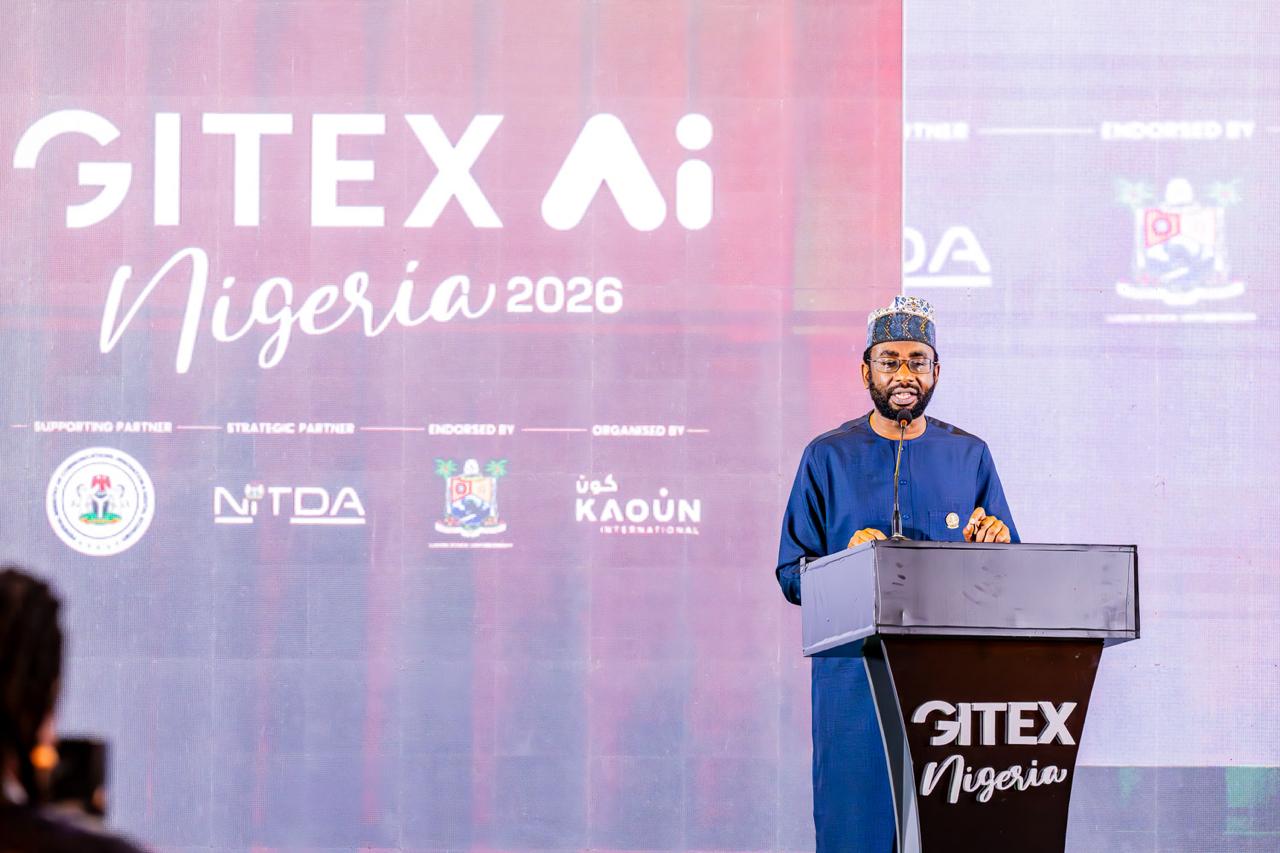
GITEX Nigeria Emphasizes Sovereign AI and Digital Transformation for a $1 Trillion Economy
GITEX Nigeria, a major tech and AI event, has launched in Abuja with a strong focus on advancing the nation's digital transformation and sovereign AI ambitions. Nigerian leaders…

Kenyan Political Operative Used Anthropic's Claude for AI-Generated Election Propaganda
A Kenyan political operative leveraged Anthropic's Claude AI to mass-produce social media propaganda ahead of the 2027 general election, praising government figures and targeting…

Anthropic Uncovers AI-Powered Political Influence Campaign in Kenya
A report by Anthropic details an AI-driven political influence operation in Kenya that used the Claude model to generate social media posts supporting the government and attacking…
The dispatch
One email a day. The AI stories shaping Africa.
Rewritten for clarity, sourced always. No spam; unsubscribe anytime.