Tether AI Unveils Offline Translation Models for 19 African Languages, Benchmarked by Peer Review
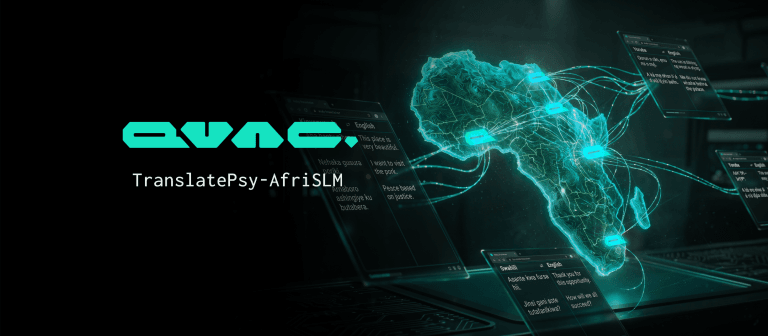
Tether AI Research has launched open-source, offline translation models supporting 19 African languages, a significant development for AI accessibility on the continent. These models, including QVAC TranslatePsy-AfriSLM and TranslatePsy-AfriNano, are designed to run entirely on smartphones and laptops without requiring an internet connection, addressing a major barrier to technology adoption in regions with limited connectivity.
Remarkably, the underlying research for these models has been accepted for presentation at EMNLP 2026, a prestigious natural language processing conference, lending strong academic credibility to Tether's performance claims. The company states its smallest AfriSLM model (800 million parameters) outperforms much larger existing models by leveraging a quality-estimation filtering technique to improve training data. This approach mirrors strategies seen in other African AI initiatives, such as Lelapa AI's InkubaLM, which prioritizes efficient data use over sheer parameter count.
The models cover a broad linguistic spectrum across West, East, Central, and Southern Africa, potentially reaching half the continent's population. The focus on offline functionality is crucial for Africa, where only about a third of residents have regular internet access and most use entry-level smartphones. Local processing also enhances data privacy, a concern highlighted by regulations like Nigeria's Data Protection Act 2023.
Tether identifies healthcare as a high-impact application, envisioning these models paired with medical foundation models to deliver health education in local languages. Other potential uses include agricultural advice, humanitarian aid, and NGO fieldwork. While the technical achievement is notable, the article also provides important context about Tether's past regulatory issues related to its stablecoin business, emphasizing that the technical work's credibility stems from peer review and public weights rather than corporate assertions.
This release contributes to a vibrant and growing field of African language AI research, joining efforts from organizations like Lelapa AI, Intron, and the N-ATLAS initiative. Tether's CEO frames this initiative as part of a broader commitment to financial inclusion, suggesting their existing solar-powered kiosks in sub-Saharan Africa could become content access points for these new language tools.
Source
More in tools
Viamo Launches Offline AI Voice Platform in Ghana to Bridge Digital Divide
Viamo has launched the 231 Voice Platform in Ghana, offering offline AI access via toll-free phone calls to millions without smartphones or internet. This initiative uses basic…

New Offline AI Diagnostic Tool Promises to Transform Healthcare in Rural Sub-Saharan Africa
Aletheia is an offline-first AI clinical decision support system specifically designed for low-resource healthcare settings in sub-Saharan Africa. It was fine-tuned on a dataset…
Intron's Sahara v2.5 Enhances African Language AI with Mid-Sentence Code-Switching and Igbo/Hausa Voice Generation
Nigerian voice AI company Intron has released Sahara v2.5, which now supports mid-sentence language switching across around 20 African languages and offers voice generation in…
Google Expands Free AI Access for African University Students to 27 Countries
Google has expanded its free AI Plus subscription to university students in 27 African countries, providing access to advanced Gemini tools and cloud storage. This move aims to…
The dispatch
One email a day. The AI stories shaping Africa.
Rewritten for clarity, sourced always. No spam; unsubscribe anytime.