Morocco Enhances Urban Policing with Advanced AI-Powered Patrol Vehicles
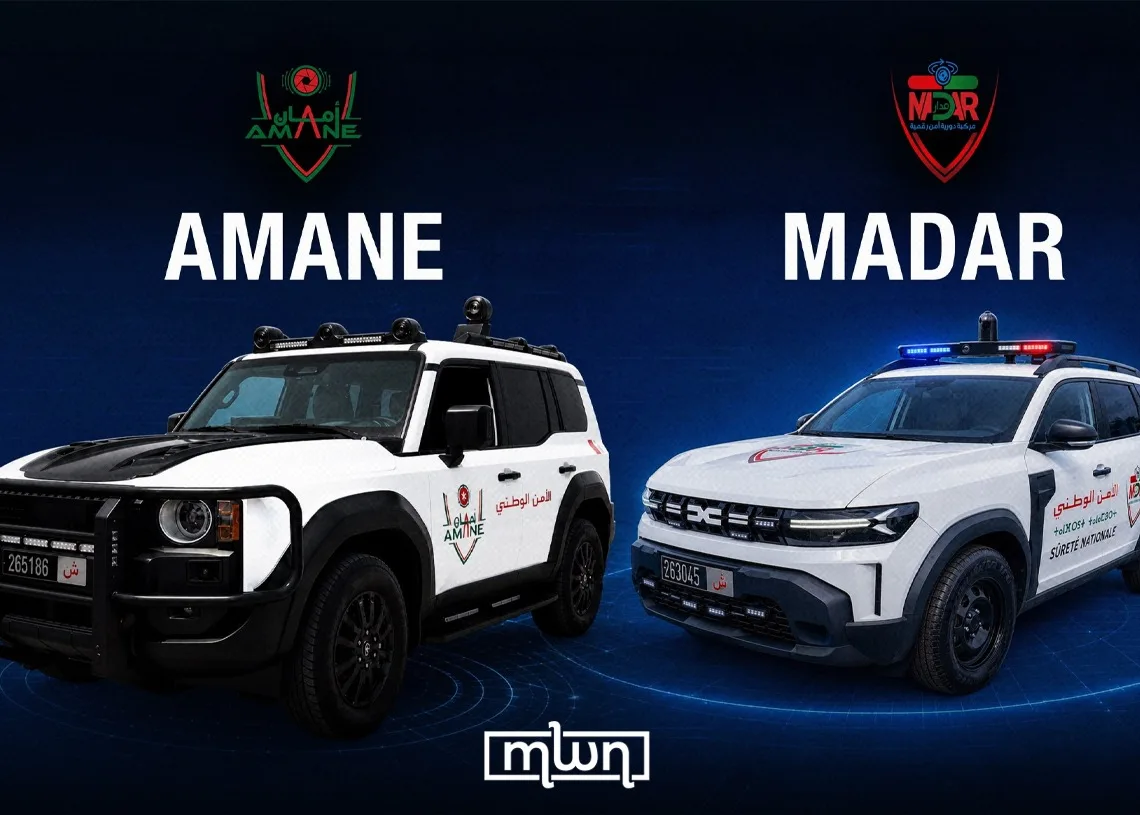
Morocco's General Directorate of National Security (DGSN) has introduced a new fleet of AI-equipped patrol vehicles, named "Amane" and "Madar," in Casablanca. These advanced units integrate facial recognition, automatic number plate reading (ANPR), and 360-degree real-time surveillance, significantly modernizing police operations and extending the capabilities of field officers through connected technologies. The deployment is part of a broader DGSN initiative to leverage innovation for enhanced urban security, proximity policing, event monitoring, and critical infrastructure protection.
The "Amane" vehicle is a self-contained system featuring 11 customized cameras for comprehensive 360-degree coverage, including panoramic and optical zoom capabilities. Its ANPR cameras boast high accuracy for Moroccan registration plates, and an internal facial recognition camera identifies the driver and assistant. This vehicle also connects directly to security networks for real-time identity verification against central databases, tagging detected events with precise geolocation. The "Madar" system, on the other hand, converts standard vehicles into mobile surveillance platforms, utilizing a unique 3D-printed flashing beacon with high-resolution cameras to monitor multiple traffic lanes and identify both vehicles and pedestrians.
The introduction of these vehicles brings biometric identification into everyday street-level policing, raising important questions about data governance, oversight, and privacy. Morocco's National Commission for the Control of Personal Data (CNDP) and the Ministry of Digital Transition are actively working on a national responsible AI platform, aiming to establish a unique ethical and sovereignty-conscious AI governance framework. This move positions Morocco as a potential "third voice" in global AI ethics, distinct from existing US, European, and Chinese models.
This deployment highlights Morocco's growing commitment to AI integration across public services and infrastructure. The country is also developing the Nexus AI Factory in Casablanca, touted as Africa's first sovereign AI infrastructure platform, and its customs authority is implementing an AI-driven risk management project. These initiatives collectively underscore Morocco's ambition to become a leader in AI adoption and governance on the African continent, showcasing practical applications while simultaneously addressing the complex ethical and regulatory challenges that arise with such advanced technologies.
Source
More in policy

Mozambique Leads Africa with National AI Education Regulations
Mozambique is drafting pioneering national regulations for AI use across its entire education system, from primary to university, with a focus on generative AI. This makes it the…

South African Data Regulator Grapples with AI's Challenge to Privacy Laws
South Africa's Information Regulator (InfoReg) is navigating the complex privacy implications of AI, finding its existing data protection laws challenged by new technologies. The…
Egypt and Intel Launch Massive AI Skills Initiative Targeting One Million Citizens Annually
Egypt has partnered with Intel on a national initiative to train one million citizens annually in AI skills over three years. This program is a cornerstone of Egypt's National AI…

Gates Foundation Pledges $1 Billion for Equitable AI Development, Prioritizing Global Health and Opportunity
The Gates Foundation's $1 billion pledge for equitable AI development is highly relevant to Africa, focusing on global health, education, and agriculture, areas critical for the…
The dispatch
One email a day. The AI stories shaping Africa.
Rewritten for clarity, sourced always. No spam; unsubscribe anytime.