Namibia and China Launch Joint AI Satellite Initiative for Capacity Building
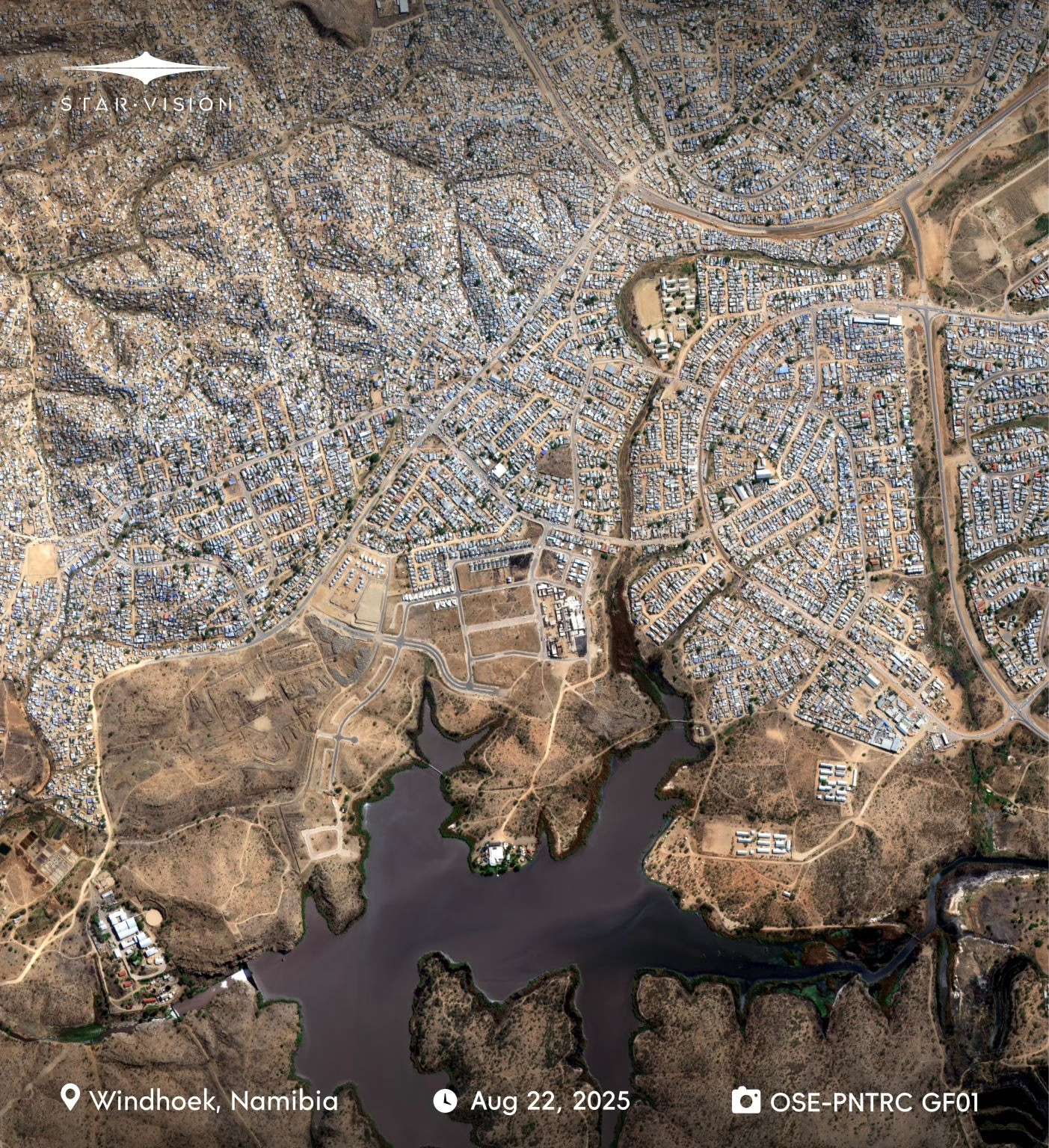
Namibia has formally launched a joint AI satellite initiative with Chinese company STAR.VISION, marking a new phase in their space cooperation. The project, announced during a Namibian presidential visit to China, aims to significantly enhance Namibia's technical expertise in satellite engineering and space science. This collaboration underscores a strategic move to leverage advanced technology for national development.
At its core, the initiative focuses on capacity development, establishing a framework for AI satellite development. It will provide Namibian researchers and students with crucial practical training in orbital engineering and satellite technologies. While the long-term goal of a Namibia-owned satellite mission remains to be fully defined, the immediate emphasis is on building a skilled workforce and fostering technological independence.
The project centers on AI-enabled satellites, which are increasingly vital for Earth observation. These satellites use onboard edge computing to process imagery in orbit, identifying events like floods or crop stress and transmitting only relevant data. This approach drastically reduces bandwidth needs, boosts operational efficiency, and accelerates decision-making for governments and businesses. For Namibia, with its extensive territory and critical needs in drought monitoring, land-use planning, and mineral prospecting, such capabilities offer direct and substantial benefits.
This partnership fits into a broader pattern of China-Africa cooperation in space and AI, often characterized by an "infrastructure-first" approach through initiatives like the Digital Silk Road. Namibia itself is concurrently pursuing various domestic AI advancements, including AI training for civil servants, the Bank of Namibia's award-winning machine learning systems, and its ICT Minister's appointment to the AI for Good Global Commission. This satellite program extends that national trajectory into the critical domain of space technology.
The success of this STAR.VISION-Namibia project will hinge on how effectively "capacity building" translates into tangible outcomes, whether through a full national satellite program or sustained academic exchange and access to advanced infrastructure. It represents a significant step for an African nation in a field traditionally dominated by global powers, potentially empowering Namibia with critical data intelligence and technological self-reliance.
Source
More in infrastructure

Egypt Launches First AI Factory with Vodafone and Cassava, Signaling Multi-Partner Strategy
Vodafone Egypt and Cassava Technologies have launched Egypt's first AI factory, offering GPU-as-a-Service with in-country data processing. This initiative is a key part of Egypt's…

UduTech Partners with BARO AI to Boost Africa's AI Computing Power with South Korean GPUs
Nigerian UduTech has partnered with South Korean BARO AI to supply high-performance GPUs to African entities, addressing the continent's critical shortage in AI computing…

Egypt Invests $1 Billion in Sovereign AI Data Centers to Boost Digital Economy
Egypt is investing significantly in building its own data and AI infrastructure, including the country's first sovereign AI data center, to reduce reliance on foreign cloud…

Egypt Unveils First National AI Factory in Partnership with Vodafone and Cassava Technologies
Egypt has launched its first national AI factory through a partnership between Vodafone Business and Cassava Technologies, aiming to establish the country as a regional AI hub.…
The dispatch
One email a day. The AI stories shaping Africa.
Rewritten for clarity, sourced always. No spam; unsubscribe anytime.