Nigerian Tech Professionals with Disabilities Leverage AI for Inclusive Access and Opportunity

This article highlights the experiences of seven Nigerian tech professionals with disabilities, showcasing their resilience and innovation in an industry often not designed for them. It emphasizes that while technology is often hailed as an equalizer, the reality for many disabled individuals in Nigeria's tech sector is complex due to inaccessible tools, hiring biases, and lack of inclusive design.
The featured professionals, such as Opeolu Akinola and Victor Ekwueme, have overcome significant challenges, including visual impairments, to build successful careers as data scientists, instructors, and entrepreneurs. They have not only adapted to existing technologies but are also actively developing solutions to bridge accessibility gaps, demonstrating a strong commitment to empowering others within their community.
A key focus of their work involves leveraging technology, including AI tools, to create more inclusive digital environments. For instance, Akinola's AccessTech Innovation and Research Centre teaches AI tools to people with disabilities, and his program received a Microsoft AI for Accessibility grant. Toyosi Badejo-Okusanya's Adaptive Atelier uses AI combined with expert insights to help companies identify and fix accessibility issues, simultaneously creating paid opportunities for disabled professionals.
Their collective efforts underscore a critical movement towards making the African tech landscape truly inclusive. By building accessible tools, providing specialized training, and advocating for design choices that consider disability, these professionals are not just succeeding individually but are also shaping a more equitable future for disabled individuals across the continent, particularly in Nigeria.
Source
More in society

AI in Southern African Healthcare: Addressing Bias and Inequality in Digital Diagnostics
AI is being deployed in Southern Africa for health screening, but research indicates a high risk of reinforcing health inequalities due to biased data and algorithms. Addressing…

African Workforce Embraces AI, But Skill Gap Hinders Complex Task Performance
A PwC survey across five African countries reveals that 71% of African workers use AI, but only 37% find it helpful for complex tasks. This highlights a critical skill gap,…

XPRIZE Launches $6M Competition to Advance Foundational Learning in Africa, with Rwanda as Key Partner
XPRIZE has launched a $6 million competition to find tech-driven solutions for foundational literacy and numeracy for first graders in Sub-Saharan Africa and India. The…
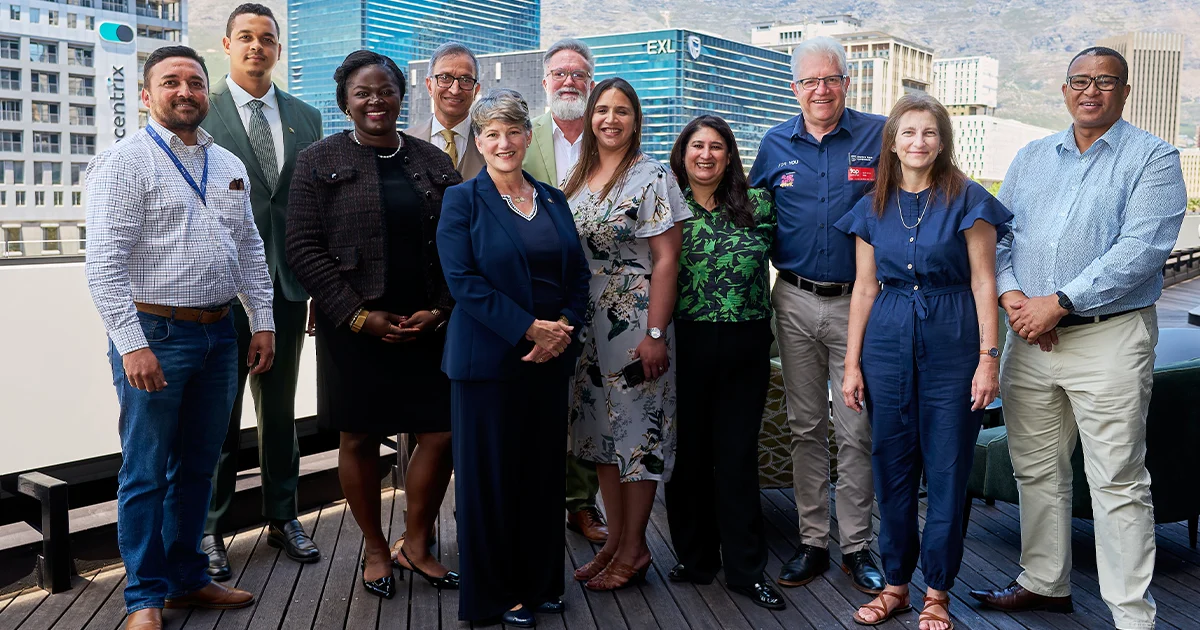
Western Cape Launches CAPEability AI to Equip Residents for the AI Economy in Partnership with Microsoft
The Western Cape Government in South Africa has launched CAPEability AI with Microsoft to prepare its residents for the AI economy, leveraging existing community infrastructure…
The dispatch
One email a day. The AI stories shaping Africa.
Rewritten for clarity, sourced always. No spam; unsubscribe anytime.