Pan-African Initiative Leverages AI Microscopy for Infectious Disease Research
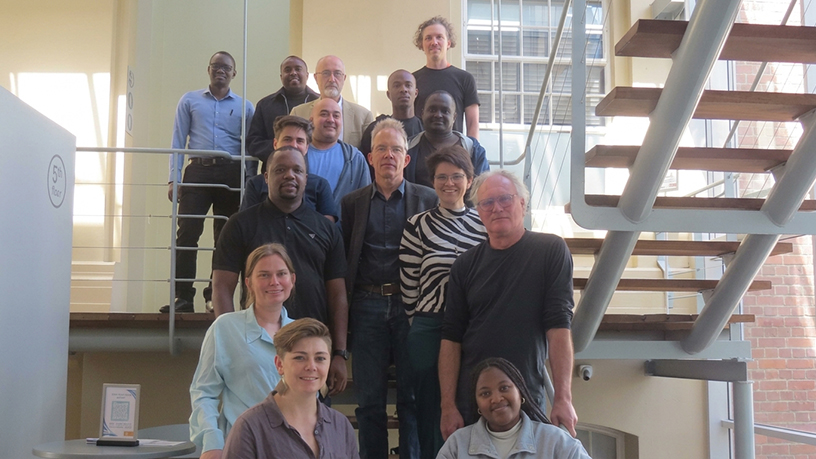
The University of Cape Town (UCT) is spearheading a significant Pan-African research program, openScopes AIDDiA, valued at £4.4 million (approximately R101 million), to integrate advanced microscopy and machine learning into the study of infectious diseases. This four-year initiative, funded by the Wellcome Trust, aims to equip African researchers with high-resolution imaging and artificial intelligence capabilities to better understand and combat prevalent diseases like tuberculosis, malaria, and Buruli ulcer.
The program is a collaborative effort involving UCT, the Kenya Medical Research Institute (KEMRI), Mbarara University of Science and Technology (MUST) in Uganda, the Centre Suisse de Recherches Scientifiques (CSRS) in Côte d’Ivoire, and Imperial College London. It was officially launched at UCT’s Institute of Infectious Disease and Molecular Medicine (IDM) in September. The core idea is to decentralize advanced research tools, making them accessible to scientists in the regions most affected by these diseases, thereby enabling local experts to lead discovery efforts.
AI, specifically machine learning, will be crucial for processing and analyzing the vast amounts of imagery generated by the microscopes. Researchers will use this technology to examine pathogens at a single-cell level, gaining insights into how infections operate and respond to treatments, particularly for drug-resistant strains. The project is developing two open-source microscopy platforms, travellerScopes (mobile) and microbeScopes (fixed installations), designed for local repair and adaptation, and to function effectively despite infrastructural challenges common in African research settings, such as unreliable electricity.
Beyond technology deployment, the program emphasizes capacity building through specialized training materials in English and French, targeting researchers across both anglophone and francophone Africa. Each African partner institution will focus on diseases of local importance, fostering a network for sharing tools, methods, and data. This initiative is highly impactful, addressing diseases that account for over 292 million cases and 1.7 million deaths globally, with more than 90% of these cases occurring in Africa, according to a WHO report.
Source
More in research

Ethiopian Researchers Develop AI for Early Breast Cancer Detection in Low-Resource Settings
Ethiopian researchers have developed an AI model, HCMAN, specifically designed for early breast cancer detection in low-resource settings across Sub-Saharan Africa. The model…
New MGhana-ST Dataset Boosts Speech Translation for Ghanaian Languages
This research introduces MGhana-ST, a new speech translation dataset for four low-resource Ghanaian languages: Ga, Twi, Ewe, and Fante. The dataset and accompanying analysis are…
AI Models Show Promise for Tuberculosis Screening in Uganda and South Africa
This research evaluates machine learning models for tuberculosis screening using clinical data gathered in Uganda and South Africa. The study demonstrates the viability of…
New AI System Delivers High-Quality Yoruba Speech Synthesis
A new rule-based AI speech synthesizer, TTSYoruba, has been developed specifically for the Yoruba language, addressing its complex tonal and phonetic features. This system is…
The dispatch
One email a day. The AI stories shaping Africa.
Rewritten for clarity, sourced always. No spam; unsubscribe anytime.