New AI Unit at UCT Targets African Health Challenges with Local Data
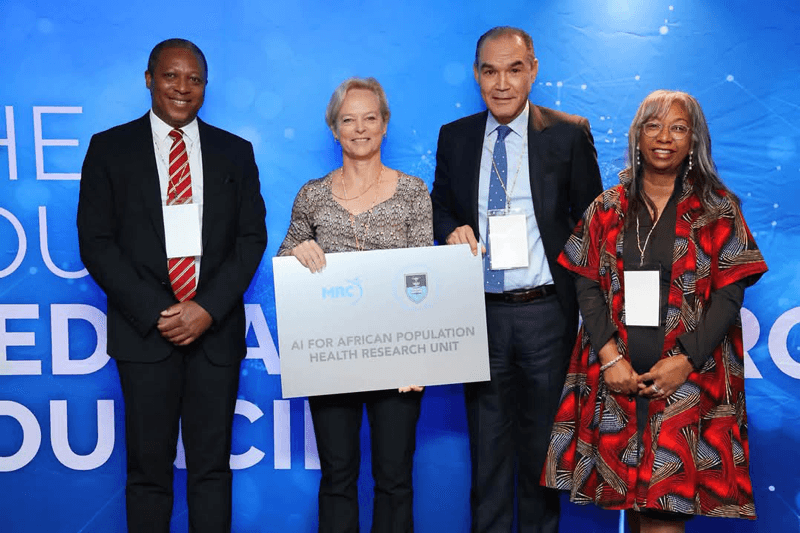
The South African Medical Research Council (SAMRC) and the University of Cape Town (UCT) have jointly launched a dedicated AI for African Population Health Unit. This new initiative aims to develop machine learning tools specifically trained on African biomedical and clinical datasets. The unit, operating within UCT's Computational Biology Division and led by Professor Nicola Mulder, addresses a critical gap where most existing medical AI is trained on unrepresentative global populations, often leading to failures in diverse clinical settings.
The unit's research will focus on South Africa's dual burden of disease, tackling both non-communicable and infectious conditions. For non-communicable diseases, the goal is to enhance early detection of cancer, diabetes, and cardiovascular disease. On the infectious disease front, the unit will concentrate on improving diagnosis, risk assessment, and clinical management for tuberculosis, HIV, and malaria. A distinctive aspect of their work will be exploring the complex interactions between these disease categories, a research question uniquely shaped by African epidemiology.
The core premise of the unit is to leverage Africa-specific data to create more accurate and equitable AI solutions. This directly counters the documented issue of medical AI systems failing when deployed in populations different from their training data, thereby exacerbating health disparities. The unit will also build on previous UCT research that highlighted the need for local data to understand how African genetic variants affect drug metabolism.
Beyond research, the unit is committed to capacity building and ethical AI development. It plans to train postgraduate students, with a focus on previously disadvantaged individuals, in interdisciplinary skills. The ethical implications of AI will be integrated into the research program to ensure responsible use. This comprehensive approach aims not only to advance AI applications for African health but also to cultivate a new generation of skilled African researchers.
Source
More in research

New AI Diagnostic Tool Aletheia Offers Offline Support for African Healthcare
Aletheia is an offline-first AI clinical decision support system specifically designed for low-resource healthcare settings across sub-Saharan Africa, addressing the critical lack…
New AfriSwitch Benchmark Reveals Major Gaps in AI Speech Recognition for African Code-Switched Languages
AfriSwitch is a new 61.36-hour benchmark dataset of human-transcribed, real-world code-switched speech across 16 African languages. It reveals that current AI speech recognition…
New TranslatePsy-AfriSLM Models Dramatically Improve African Language Translation for Low-Resource AI
TranslatePsy-AfriSLM introduces open-source machine translation resources for 19 Sub-Saharan African languages, including curated and synthetic data, and fine-tuned SLMs. These…
New AI Model Improves Poverty Mapping in Africa by Quantifying Uncertainty
A new machine learning method uses satellite imagery to predict poverty levels across Africa, providing crucial uncertainty estimates for policymakers. This innovation helps…
The dispatch
One email a day. The AI stories shaping Africa.
Rewritten for clarity, sourced always. No spam; unsubscribe anytime.