African Leaders Urge Indigenous AI Legal Frameworks and Data Sovereignty
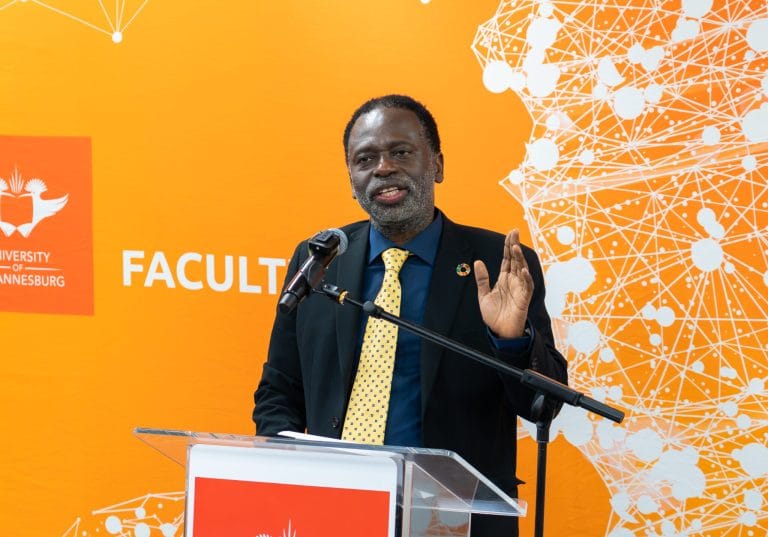
At the University of Johannesburg's inaugural AI and the Law Conference held in Kruger National Park, prominent African figures called for a distinct, Africa-centric approach to AI regulation. UN Under-Secretary-General Professor Tshilidzi Marwala cautioned against over-reliance on probabilistic AI systems, particularly in criminal justice, stressing that technical accuracy does not equate to truth. He advocated for a holistic approach encompassing law, governance, and a balanced consideration of AI's trade-offs, warning against allowing tech companies to dictate the rules for tools intended to bridge justice gaps.
UJ Vice-Chancellor Professor Letlhokwa George Mpedi reinforced this stance, arguing forcefully that Africa must not simply adopt AI governance frameworks developed for other regions. He highlighted that AI models reflect the data they are trained on, and an overreliance on Western data risks defining Africa's reality through an external lens. Mpedi proposed an "AI equivalent of geographical indication" to safeguard African cultural data and intellectual property from foreign exploitation, drawing parallels with South Africa's protection of Rooibos.
Furthermore, Mpedi underscored the critical linguistic challenge, noting that while Africa boasts approximately 2,000 languages, leading AI systems are proficient in only a fraction. He emphasized that AI-driven legal tools cannot be considered neutral if they fail to function competently in major African languages like isiZulu or Sesotho, pointing to potential biases and exclusion.
Both Marwala and Mpedi converged on the message that law, governance, and innovation must be integrated, and that Africa possesses significant collective leverage. They highlighted the potential power of the African Union and the African Continental Free Trade Area, representing 54 countries and 1.4 billion people, to collectively influence how African data is utilized for AI training and to shape global AI standards.
The conference served as a crucial platform for advancing discussions on responsible AI development tailored to the continent's unique needs. By advocating for locally informed legal instruments and governance structures, African leaders aim to ensure that AI serves the continent's diverse populations equitably and sustainably, learning from historical precedents like the conservation efforts in Kruger National Park.
Source
More in policy
South Africa Leads BRICS Call for Global AI Governance and Independent Evaluation
South Africa, through President Cyril Ramaphosa, is advocating for a robust international framework for AI governance within the BRICS bloc, including independent scientific…
GITEX Nigeria Emphasizes Sovereign AI and Digital Transformation for a $1 Trillion Economy
GITEX Nigeria, a major tech and AI event, has launched in Abuja with a strong focus on advancing the nation's digital transformation and sovereign AI ambitions. Nigerian leaders…

Kenyan Political Operative Used Anthropic's Claude for AI-Generated Election Propaganda
A Kenyan political operative leveraged Anthropic's Claude AI to mass-produce social media propaganda ahead of the 2027 general election, praising government figures and targeting…

Anthropic Uncovers AI-Powered Political Influence Campaign in Kenya
A report by Anthropic details an AI-driven political influence operation in Kenya that used the Claude model to generate social media posts supporting the government and attacking…
The dispatch
One email a day. The AI stories shaping Africa.
Rewritten for clarity, sourced always. No spam; unsubscribe anytime.